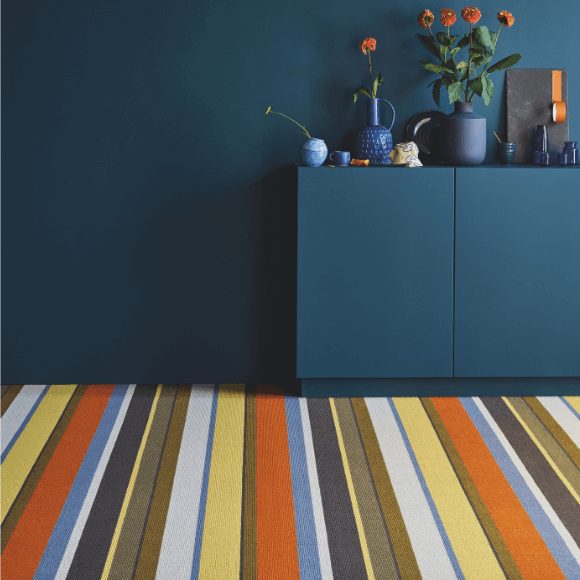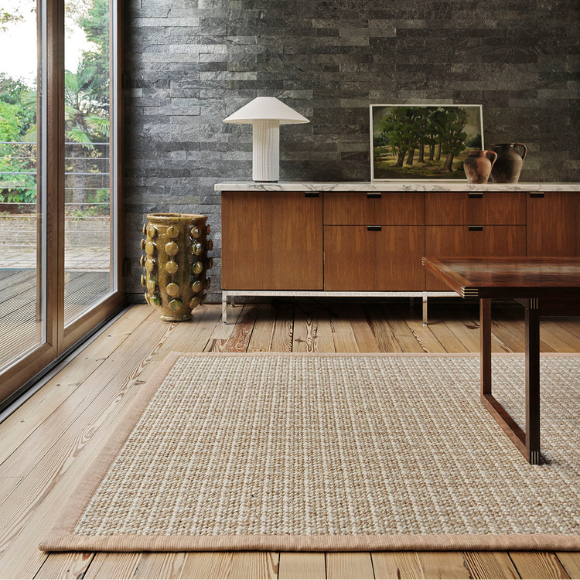
A rug can completely change how a room feels, but getting the size, material and proportions right is often harder than choosing a colour. If a standard rug leaves an awkward gap around your furniture, clashes with the room’s proportions or simply does not give you the finish you had in mind, a bespoke option can make much more sense. For homeowners looking for bespoke rugs London, the key is to start with the room rather than the rug itself.
We offer a broad selection of carpets and natural flooring alongside a bespoke rug builder, giving you the opportunity to consider the overall flooring scheme before settling on one particular design. With more than 20 carpet suppliers represented across the collection, there is also plenty of scope to compare materials, textures, colours and construction.
Have a particular room or rug in mind? Contact our team to discuss your requirements and explore suitable materials, sizes and flooring options.
What makes a bespoke rug different?
A bespoke rug is made or adapted around the requirements of a particular space rather than forcing the room to accommodate a standard size.
That difference becomes noticeable in rooms with unusual proportions. A large open-plan sitting room, for example, may need a rug large enough to sit beneath the front legs of several pieces of furniture. A narrow hallway might need a long runner instead of a conventional rectangular rug. In a dining room, the rug also needs enough additional surface area around the table to accommodate chairs when they are pulled back.
The objective is not simply to create something unusual. It is to get the size, shape, colour, texture and material working together.
When should you consider a bespoke rug?
A custom rug can be particularly useful when:
- A standard rug does not fit the dimensions of the room
- You need a specific colour to work with existing furniture
- The room has an unusual layout
- You want a particular material or texture
- You need a runner or non-standard shape
- You want the rug to define a particular area within an open-plan room
- You are working around existing architectural features
This is where bespoke rugs London becomes more than a design search. It is often a practical solution to a room that does not work particularly well with off-the-shelf dimensions.
Bespoke carpet London or a bespoke rug: which do you actually need?
People searching for bespoke carpet London are not always looking for the same thing. Sometimes the requirement is a completely fitted floor covering; in other cases, the real need is a rug that defines a seating or dining area while leaving the surrounding flooring visible.
A fitted carpet is generally the more suitable option when you want wall-to-wall coverage, particularly in bedrooms, stairs, hallways or larger continuous areas. A rug is different. It creates a defined zone and can be changed without replacing the entire floor.
For example, imagine a living room with a high-quality wool carpet already installed. Replacing the whole floor may be unnecessary if the real issue is that the seating area lacks definition. A carefully sized rug can create that visual boundary while retaining the existing carpet underneath.
The decision should therefore begin with the purpose of the floor covering, not simply the keyword used to find it.
Choosing the right material for your rug
Material affects far more than appearance. It influences texture, durability, maintenance requirements and how the rug feels within the room.
Wool rugs
Wool remains a popular choice for interiors where comfort, natural texture and long-term performance matter. The current carpet collection includes several 100% wool options, including products with different constructions and pile weights.
For example, the Riviera Royalty Limestone carpet uses 100% New Zealand wool, has a 1,350g/m² pile weight and is rated for heavy domestic and medium contract use. These specifications demonstrate why looking beyond colour is important when comparing flooring.
Wool can work particularly well in living rooms, bedrooms and other areas where the feel of the material is an important part of the design.
Sisal
Sisal gives interiors a noticeably more textured, natural appearance. It is particularly suited to schemes where you want the floor covering to contribute texture rather than simply provide a soft surface.
The collection includes sisal products from established flooring suppliers, with different weaves and colour options available.
Sisal can be worth considering for living areas, hallways and other spaces where a more structured natural texture suits the interior.
Seagrass
Seagrass has a distinctive woven appearance and works well with neutral, coastal, rustic and contemporary interiors. The collection includes seagrass flooring options, including Fine Seagrass products designed for residential environments.
If your search is specifically for natural fibre rugs London, compare the actual construction and intended use rather than choosing a material purely because it is described as natural.
Other natural fibres
Depending on the collection, natural flooring can also include materials such as jute, coir and sisool. These materials have different textures and practical characteristics, so the right choice depends on the room, traffic levels and desired finish.
Our current catalogue allows customers to browse flooring by material, colour, type and supplier, making it easier to narrow down a large collection before making a decision.
How to choose the right rug size for a London home
Rug sizing should be decided in relation to the furniture, not simply the available floor area.
For a living room, one common approach is to position the rug so that at least the front legs of the main seating pieces sit on it. This helps visually connect the furniture rather than leaving the rug looking like a small island in the centre of the room.
Dining rooms require a little more planning. The rug needs to extend beyond the table sufficiently for dining chairs to remain on the rug when pulled away from the table.
Bedrooms present another option. A larger rug can sit underneath the bed and extend beyond the sides, while runners or smaller rugs can be used beside the bed when a full-size rug is not practical.
Before ordering a made-to-measure piece, measure the room and mark the proposed rug dimensions on the floor using masking tape. It is a simple step, but it can reveal whether furniture will sit comfortably within the intended area.
Why natural fibre rugs work well in considered interiors
The appeal of natural fibre rugs London homeowners often look for is not just about sustainability or material choice. Natural fibres bring visible texture into a room.
Sisal can introduce a tighter woven pattern. Seagrass can create a more relaxed surface. Wool can provide softness and warmth. Jute can give a softer, more organic appearance.
That variation is useful when the rest of the room is already visually busy. Instead of introducing another strong pattern, a textured natural fibre can add interest without competing with furniture, artwork or architectural details.
The same principle applies to neutral colour schemes. A cream or natural-toned rug does not necessarily have to look plain when its weave, pile and texture provide enough visual depth.
Look beyond colour when comparing rugs
Colour is often the first thing people notice, but it should not be the only deciding factor.
When comparing two similar-looking rugs, check:
- Fibre: wool, sisal, seagrass or another material.
- Construction: loop, flat weave, tufted or another construction.
- Pile weight: useful when comparing similar products.
- Backing: this affects how the flooring is constructed and installed.
- Suitability: check whether the product is intended for light, heavy domestic or contract environments.
- Dimensions: make sure the finished size works with the furniture.
- Maintenance: consider how the room is used before choosing the material.
The current collection demonstrates why these details matter. For instance, one Hugh Mackay wool product listed on the site has a 1,000g/m² pile weight, hessian backing and heavy domestic/medium contract suitability. Another wool product has a substantially higher 2,100g/m² pile weight and flat-woven construction.
Two products can therefore both be described as wool flooring while providing quite different results underfoot.
Why seeing samples matters
Online photographs are useful for narrowing down choices, but flooring is highly tactile. Texture, pile height and colour can look different depending on lighting, surrounding materials and the scale of the room.
A sample viewed beside your sofa, curtains, timber flooring or painted walls can tell you considerably more than a product image on its own.
This is particularly important with natural materials because variations in weave and texture are part of their character. A neutral sisal, for example, can look very different beside cool grey furniture compared with warm oak flooring.
Visiting the showroom also gives you the opportunity to discuss the practical side of the project rather than choosing purely from photographs.
Why work with a carpet specialist for a bespoke project?
The value of specialist advice is often in narrowing down the options.
The current collection covers wool, sisal, seagrass, coir, jute and other materials, as well as carpet styles such as herringbone, loop pile and flat weave. It also includes products from more than 20 suppliers.
That range is useful, but it can also make the initial choice harder. A flooring specialist can help you move from “I want a natural-looking rug” to something more specific, such as a heavy-use wool option, a textured sisal finish or a particular construction that suits the room.
Brompton Carpets has been established since 2001 and provides flooring for both residential and business environments. Its collection covers carpets, natural flooring and other flooring options, supported by in-person advice from the team.
Start with the room, then choose the rug
The right bespoke rug should solve a specific design or practical requirement. It might be the exact size needed to bring a large seating arrangement together, a natural fibre surface that adds texture to a neutral interior, or a carefully chosen wool design that provides warmth and comfort.
For homeowners comparing bespoke rugs London options, the most useful starting point is therefore not simply colour or price. Consider how the room is used, where the furniture sits, how much traffic the area receives and which material will make sense for the way you live.
If you are also comparing bespoke carpet London options, decide whether you need a fitted floor covering or whether a made-to-measure rug would solve the problem more effectively.
For projects where texture and natural materials are important, natural fibre rugs London homeowners can explore include options in sisal, seagrass, jute, coir and wool.
Contact our team on +44 20 7352 5111 or visit 457 Fulham Road, SW10 9UZ, Chelsea, London, to discuss your flooring or rug requirements.
Frequently Asked Questions
Are bespoke rugs worth considering for small rooms?
Yes, particularly when a standard rug leaves awkward gaps or overwhelms the available floor space. A made-to-measure rug can be planned around the room’s furniture and proportions rather than forcing the layout around a fixed size.
Which natural fibre is best for a rug?
There is no single material that suits every room. Wool is often considered where softness and comfort are priorities, while sisal and seagrass provide stronger woven textures. The amount of foot traffic, desired appearance and maintenance requirements should all be considered before choosing.
Can a bespoke rug be used over carpet?
Yes. A rug can be used over fitted carpet to define a seating, dining or bedroom area. The important considerations are the rug’s dimensions, the carpet pile underneath and how the finished combination will sit with the furniture.
How should I measure for a bespoke rug?
Measure the area you want the rug to occupy and then mark the proposed dimensions on the floor before ordering. For seating areas, measure around the furniture rather than simply measuring the empty floor space.
Where can I view carpet and natural flooring options in Chelsea?
The showroom is located at 457 Fulham Road, SW10 9UZ, Chelsea, London. Opening hours are Monday to Friday from 9:00am to 6:00pm and Saturday from 10:00am to 4:00pm.
Brompton Carpets
457 Fulham Road, SW10 9UZ, Chelsea, London
+44 20 7352 5111
bromptoncarpets@yahoo.co.uk
Monday–Friday: 9:00am–6:00pm
Saturday: 10:00am–4:00pm
Sunday: Closed