Stairs are the hardest-working part of any carpeted home. They take heavy daily footfall, twisting pressure on the edge of every step, and wear in exactly the same spots year after year. Choose the wrong carpet and you will see flattened pile, shiny patches and fraying within a few years. Choose well and a good stair carpet can look sharp for a decade or more.
At Brompton Carpets we supply and fit carpets, runners and flooring across London from our showroom on Fulham Road. This guide explains what really matters when choosing the best carpet for stairs, which options we recommend and why, and the mistakes to avoid.
The quick answer
The best carpet for stairs is a dense, hard-wearing wool or wool-blend carpet in a short twist or loop pile, rated for at least heavy domestic use, laid over a firm stair-grade underlay and fitted by an experienced fitter. If you prefer a natural look, flatweave and herringbone wool carpets and natural fibres such as sisal can also work well. The right choice depends on your household, your budget and the style of your home.
Why stairs are different from other rooms
Carpet on a staircase is under far more stress than carpet in a bedroom or living room:
- Concentrated wear. Everyone steps in the same places, and the edge of each step (the nosing) takes the most abrasion.
- Bending and stretching. The carpet is wrapped over each step, so weaker constructions can crack, crease or loosen.
- Visibility of marks. Stairs are seen from above and at eye level, so shading, footprints and stains show quickly.
- Safety. A carpet that is too deep, too loose or too slippery is a trip hazard.
For these reasons we never recommend simply moving a living-room carpet onto the stairs. Stair carpet should be chosen for the job.
What to look for in a stair carpet
1. Fibre. Wool is naturally resilient, so the fibres spring back after being pressed down, which helps it keep its appearance on high-traffic steps. Nylon and polypropylene blends can also perform well and are often more affordable.
2. Pile style and height. Shorter, denser pile stands up to stairs better than deep, soft pile. Loop pile and twist pile hide wear and footprints well. Very deep or velvet-style pile tends to show marks and shading on the steps.
3. Durability rating. Look for a carpet rated for at least heavy domestic use, or a commercial-class carpet if your stairs are very busy. If you are unsure how to read the rating on a sample, ask us and we will explain it.
4. Underlay. Stairs need a firm, dense underlay. Thick, soft underlay lets the carpet move and wear faster at the nosing.
5. Colour and pattern. Mid-tones and subtle textures forgive dust and marks better than very pale or very dark plain colours. Patterns can look beautiful but need careful matching from step to step, so allow for extra material.
The best types of carpet for stairs
Wool carpet
Wool is our first recommendation for most homes. It is durable, warm underfoot, quiet and naturally resilient. It also suits period and modern properties alike. Explore our wool carpets to see colours and textures in a range of price points, or browse ranges from trusted suppliers such as Brintons and Abingdon.
Loop pile carpet
Loop pile has a textured, slightly flecked surface that is very good at hiding wear. It is a practical choice for families, pets and busy hallways, and it gives stairs a clean, contemporary finish.
Flatweave and herringbone carpet
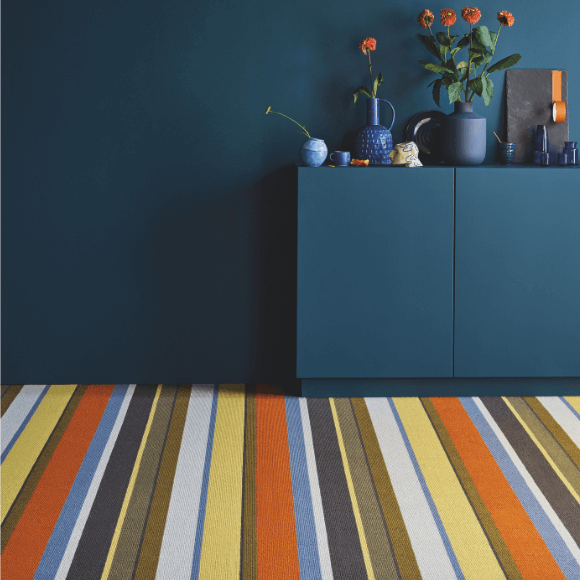
Flatweave and herringbone designs have a tailored, architectural look that suits stairs and landings particularly well. The pattern also helps disguise day-to-day wear. See our herringbone carpets for ideas.
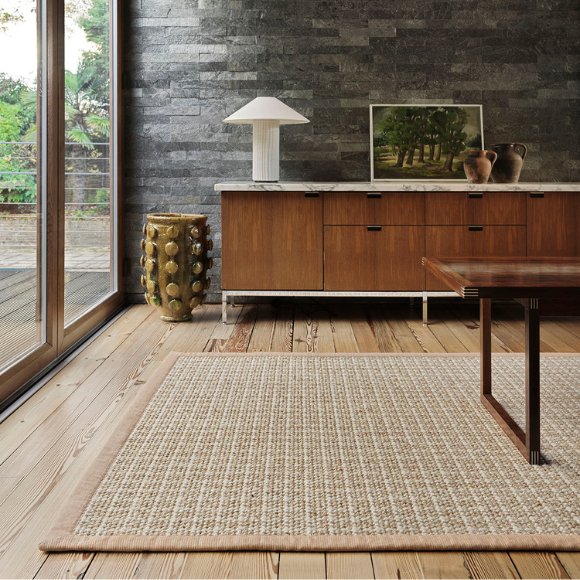
Natural fibres: sisal, seagrass and jute
Natural fibre carpets give stairs a textured, organic look and are very hard-wearing. They can feel firmer and slightly less slippery-safe underfoot than wool, especially in socks, so ask for a sample and try it before you decide. Browse sisal, seagrass and jute options to compare the look and feel.
Synthetic carpets (polypropylene and nylon)
Synthetic carpets are a sensible option where budget matters or where stains are a concern. Good-quality constructions are stain-resistant and easy to clean, and they come in a wide choice of colours.
Not sure which one suits your staircase? Visit our showroom at 457 Fulham Road, Chelsea SW10 9UZ, or call us on +44 20 7352 5111. We can show you samples, talk through your options and arrange a no-obligation quote.
Fitted carpet or stair runner?
A fitted stair carpet covers the full width of each step. It is warmer, quieter and gives a seamless look from the landing to the hall.
A stair runner is a strip of carpet down the centre of the stairs, usually held with stair rods, leaving the edges of the steps exposed. It is a classic choice for period homes and for showing off good wooden or painted stairs, and it is easy to refresh later. Take a look at our stair runners, or if you want something truly unique, our bespoke rug and runner builder lets you choose size, borders and finishes.
Why professional measuring and fitting matter
Even the best carpet will wear badly if it is fitted badly. Stairs need accurate measuring of every tread and riser, careful pattern matching, firm gripper and the correct underlay. Curved steps, winders and half-landings add complexity, and a poorly stretched carpet can ripple or work loose over time. We offer professional measuring and fitting across London, so you get a safe, neat result.
How much does stair carpet cost?
There is no single price, because the cost depends on:
- the fibre and quality of the carpet
- the pile style and any pattern to be matched
- the number of steps and the size of the landing
- whether the stairs are straight, curved or have winders
- the underlay you choose and the fitting required
The most reliable way to budget is to get your stairs measured. We provide a no-obligation quotation so you know the full cost before you commit.
Looking after your stair carpet
- Vacuum regularly, using a suitable attachment on the edges and nosings.
- Deal with spills straight away by blotting, not rubbing.
- Use a professional clean when needed, following the manufacturer’s care guidance.
- If you can, keep a small offcut for future repairs.
Ready to choose your stair carpet?
We work with over 20 trusted carpet suppliers, which means we can match your staircase, style and budget with the right carpet rather than the one we happen to stock. Get in touch with Brompton Carpets to book a visit, request samples or arrange a quote, or call us on +44 20 7352 5111.
Frequently asked questions
1. What is the best carpet for stairs?
For most homes, a dense wool or wool-blend carpet in a short twist or loop pile is the best choice for stairs. It stands up to heavy use, hides wear well and feels comfortable underfoot. Pair it with a firm stair underlay and professional fitting for the best results.
2. Is wool carpet good for stairs?
Yes. Wool is naturally resilient, so it springs back after being walked on, which helps keep stairs looking good for longer. It is also warm, quiet and available in many colours and textures. Wool carpets usually cost more than synthetic ones but often last longer.
3. Which pile is best for stairs: loop or twist?
Both work well. Loop pile is very hard-wearing and hides wear and marks, while twist pile has a softer feel and disguises footprints. Avoid very deep or velvet-style pile on stairs, as it tends to show shading and can be harder to fit neatly.
4. Can I use sisal or seagrass on stairs?
Yes, sisal and seagrass are durable and look striking on stairs. They feel firmer than wool and can be less comfortable or slightly more slippery underfoot, especially in socks, so try a sample first. We can advise whether they suit your household.
5. Should I choose a fitted stair carpet or a runner?
A fitted carpet is warmer, quieter and covers the full step, while a runner shows off the edges of the stairs and suits period homes. The best choice depends on your stairs, your style and your budget. Visit our showroom and we can show you both.